
Heat gets the warnings. Cold does its damage quietly, one long night at a time, and the dogs it hurts most are the ones nobody brings inside. If you’ve ever looked out a window and wondered how cold is too cold for dogs outside, you already have the instinct that matters. This guide covers the real answer, what Virginia law requires, and what to do when the dog shivering in the yard isn’t yours.
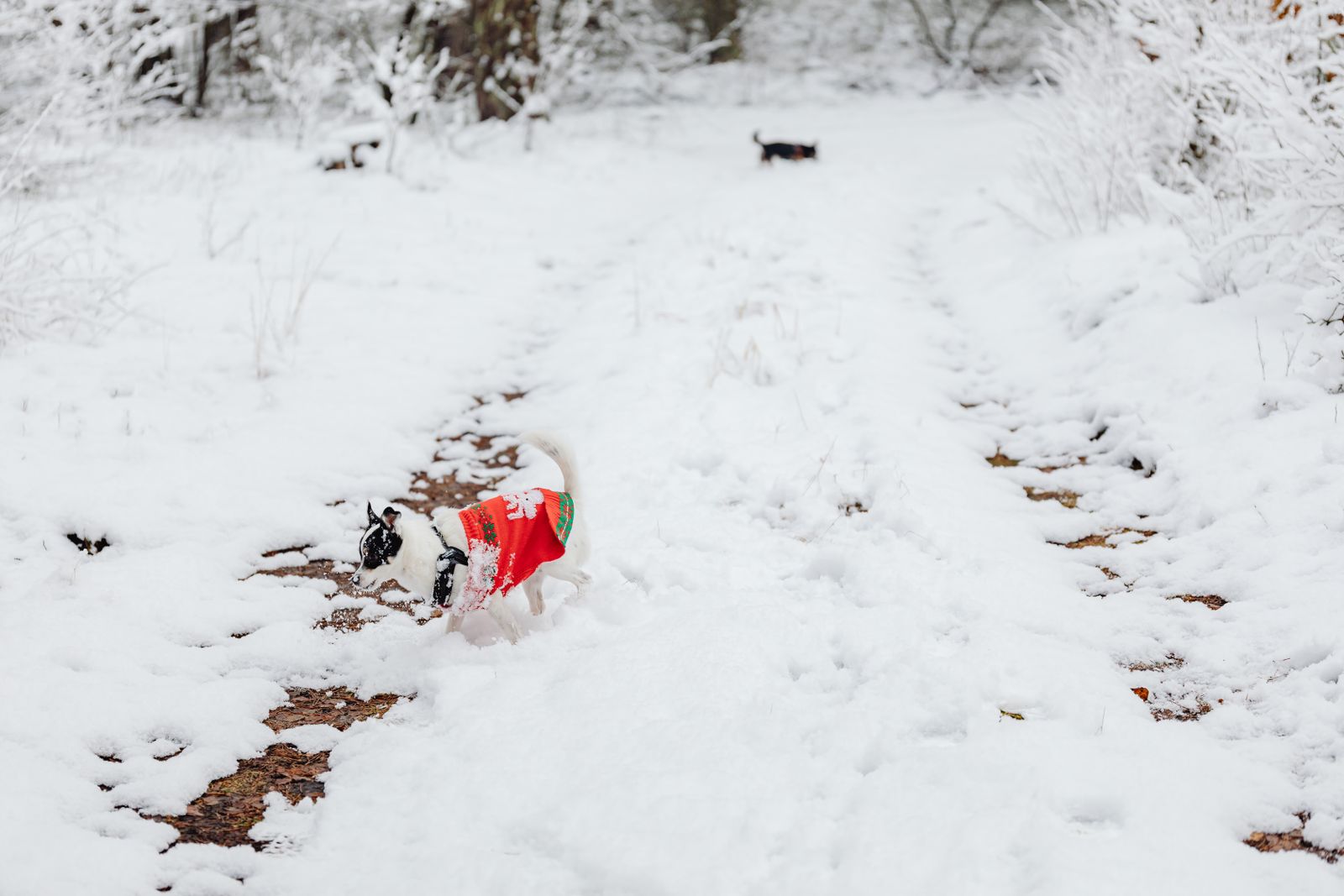
We spend our days with dogs who came out of neglect, and winter neglect rarely looks like cruelty from the street. It looks like a doghouse with no bedding. A water bowl frozen solid. A chain that’s been in the same spot since July. Cold works like the heat we covered in our summer pet safety guide. It takes a situation that was barely okay and turns it into an emergency.
How cold is too cold for dogs outside? The short answer
There isn’t one number that fits every dog. The American Veterinary Medical Association (AVMA) says cold tolerance varies with a dog’s coat, body fat, activity level and health. Its baseline advice is simple: keep dogs inside during cold weather, and never leave a pet outside for long periods when it’s below freezing.
Virginia law draws its line in the same place. The state says tying a dog outside doesn’t count as adequate shelter at 32°F or below. So our working answer looks like this:
- 32°F and below: no dog should be living outside. Bring them in.
- Above freezing: not automatically safe. A short-coated, short-legged, senior or underweight dog can be in real trouble on a raw, wet night that never hits 32.
- Any temperature: if a dog is shivering, slowing down or can’t get dry, it’s too cold for that dog.
Wet makes everything worse. Rain, sleet and wind pull heat out of a body fast. The AVMA even warns that a wet sweater or coat can make a dog colder.
Which dogs feel the cold first
The real question is which dog. According to the AVMA, these dogs feel the cold faster:
- Short-haired dogs, who have less coat between them and the weather
- Short-legged dogs, whose bellies brush snow-covered ground
- Very young and very old dogs
- Thin dogs, which the AVMA calls particularly susceptible to cold
- Dogs with diabetes, heart disease, kidney disease or hormonal conditions such as Cushing’s disease, which make body temperature harder to regulate
- Arthritic and senior dogs, who are more likely to slip and fall on snow and ice
Thick-coated breeds built for cold handle it better, but the AVMA is clear that they’re still at risk. A heavy coat isn’t a permission slip to leave a dog out all night.
Then there are the dogs we worry about most: the ones already living with neglect. An underweight dog has no reserves to burn for warmth. The AVMA notes that outdoor pets need more calories in winter just to stay warm. A dog who was underfed in September starts the cold months with nothing in the tank. It’s a big part of why winter is the most dangerous season for neglected dogs.
What temperature is too cold for dogs to sleep outside?
Nights are where the damage happens. Temperatures bottom out before dawn, nobody is watching, and a dog tied in the yard can’t come to the door. The AVMA doesn’t recommend keeping any pet outside for long periods in the cold. So our answer on what temperature is too cold for dogs to sleep outside is plain: once nights drop to freezing, the dog sleeps inside.
If a dog has to spend part of the day outdoors, the AVMA’s shelter guidance is the place to start:
- A warm, solid shelter that blocks the wind, with the door turned away from prevailing winds
- A floor raised off the ground, so the cold earth doesn’t pull heat out from below
- Thick, dry bedding, changed regularly
- Unlimited fresh water that isn’t frozen, changed often or kept in a pet-safe heated bowl
- No space heaters or heat lamps, which can burn a dog or start a fire, and caution with heated pet mats
- Extra food, since outdoor dogs burn more calories in winter (ask your vet how much)
What temperature is too cold for dogs to walk outside?
There’s no official cutoff for walks either. They’re different, because you’re right there and you can head home. The AVMA suggests shortening walks in very cold weather and checking paws often for cracked or bleeding pads. Wipe your dog’s feet, legs and belly when you get back. De-icers and antifreeze are toxic if licked off, and even a small amount of antifreeze can be deadly. If your dog has a short coat or seems miserable, a dry sweater is worth it. A wet one isn’t.
What Virginia law requires when it gets cold
Virginia Code § 3.2-6503 requires every owner to provide adequate food, water, shelter, space, exercise, care and veterinary care. The definitions in § 3.2-6500 spell out what adequate shelter means once it gets cold:
- Shelter that keeps the animal safe from rain, sleet, snow and the adverse effects of cold
- A windbreak at the entrance
- Enough bedding, such as hay or cedar shavings, to keep out the cold and hold in body heat
- For dogs and cats, a solid resting surface like a platform, pad or floormat big enough to lie on normally
- No wire, grid or slat floors that let feet slip through, sag under the dog’s weight or injure paws
Water counts, too. The law defines adequate water as clean, fresh water “of a drinkable temperature.” A bowl frozen solid is hard to square with that.
The tethering rule is the one to remember. Under § 3.2-6500, tying a dog outside does not count as adequate shelter when the actual or effective outdoor temperature is 32°F or lower. The same applies during a National Weather Service winter storm warning or other severe weather warning. The exception is narrow. An animal control officer has to inspect that specific dog and decide it’s safe from predators and well equipped for the conditions.
Even on a mild day, a tethered dog only counts as sheltered if it meets that same standard. The tether itself has to be at least 15 feet long or four times the dog’s length, whichever is greater, with limited exceptions.
These rules carry real penalties. A first violation of § 3.2-6503 is a Class 4 misdemeanor. A second or later violation involving food, water, shelter or veterinary care is a Class 2 misdemeanor. We’re not lawyers, and this isn’t legal advice. Your local animal control officer is the person who applies these rules to a specific dog.
Signs a dog has been outside too long
The thermometer tells you about cold in general. The dog in front of you tells you about this one. Watch for:
- Shivering that doesn’t stop
- Slowing down, lethargy or reluctance to move
- Limping or sudden lameness, which the AVMA notes can come from ice packed between the toes
- Cracked or bleeding paw pads
- Visible weight loss, with ribs, spine or hip bones showing
- No shelter at all, or a shelter with no windbreak, no bedding and a frozen water bowl
If you think your own dog has hypothermia or frostbite, the AVMA’s advice is to call your veterinarian immediately.
When a neighbor’s dog is left outside in the cold
Maybe your neighbor leaves their dog outside in the cold every night, and you’ve been telling yourself it’s not your business. It is. Knowing the signs only matters if somebody acts on them, and the dog can’t make the call. Here’s how to report a dog left outside in the cold in Virginia.
First, document what you can, safely. Write down the address, the date, the time and the temperature. “Tethered, no shelter, 28 degrees at 6 a.m.” gives an officer something to act on. Take photos or video from public property or your own yard. Never trespass, never confront the owner and never try to take the dog yourself.
Then make the right call:
- Immediate danger: 911. A dog that has collapsed or can’t move needs care right now.
- Everything else: your city or county animal control. Animal control officers have the legal authority to investigate, and they’re the ones who apply the shelter rules above.
- Our Animal Abuse Hotline: (844) 728-2729. We take reports, help you find the right local agency and follow up. If you’re not sure what you’re seeing is “enough,” call and talk it through.
Our full guide on how to report animal abuse in Virginia walks through each call in more detail. Not every report ends in a seizure or a charge, and that’s okay. Sometimes one visit from an officer is what gets a dog a real shelter, a dry bed and a bowl of water that isn’t ice.
Cold nights are coming. Save our hotline number in your phone today, so it’s there the first time you see a dog who should be inside. If you want to do more, get involved as a volunteer or foster. That’s how one phone call becomes a warm place to sleep. Be The Voice For The Voiceless®.