
Every summer, our hotline rings more. Not because people care less in the heat, but because the heat itself turns neglect into an emergency. A dog that survives a chain in April can die on that same chain in July. Summer pet safety isn’t a seasonal reminder for us. It’s the difference between a rescue call and a recovery call.
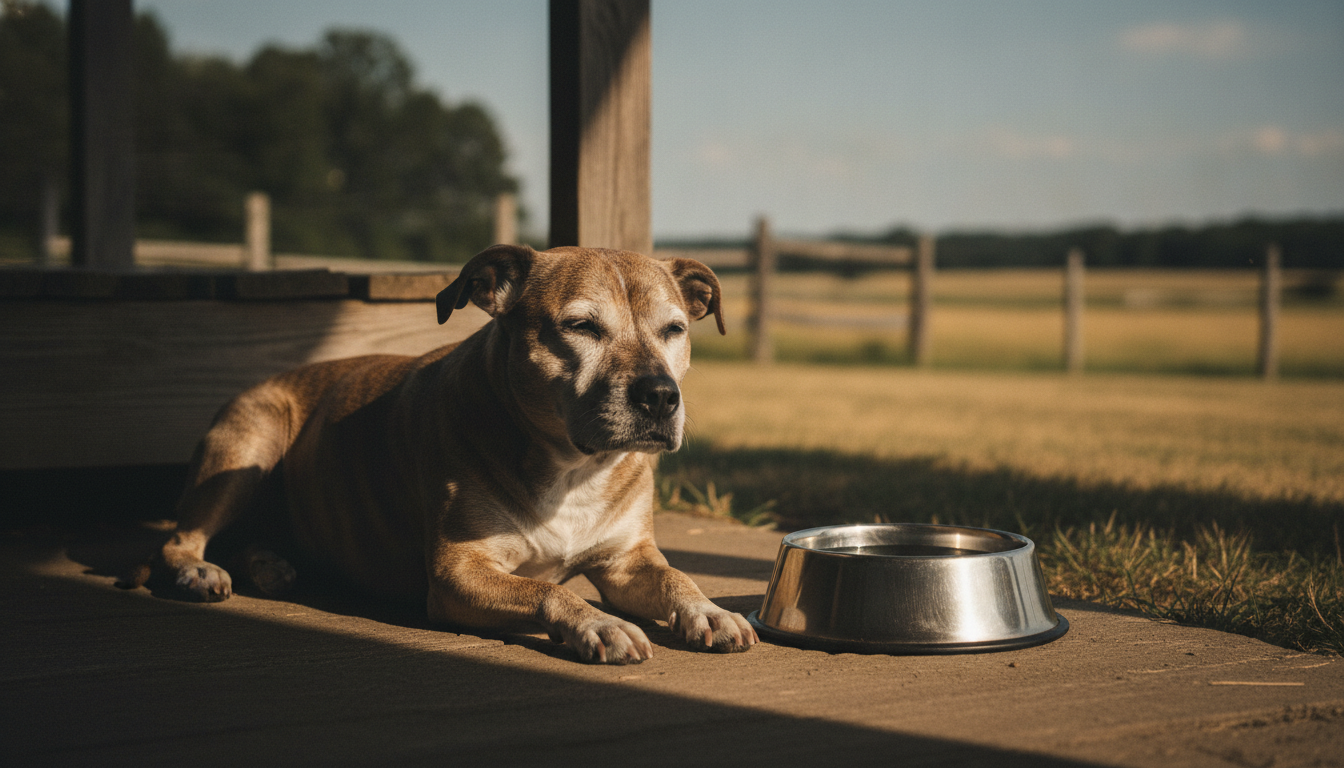
Here’s what we see when Virginia temperatures climb, which animals are most at risk, and the summer pet safety steps that matter when you spot one.
Why summer pet safety is a rescue issue
Most of the cruelty cases we respond to in summer didn’t start in summer. They started months earlier as marginal situations: a dog kept outside with a water bowl that sometimes got filled, a pen with partial shade, a tether just long enough to reach shelter. Heat removes the margin.
Dogs can’t sweat the way we do. They regulate temperature almost entirely by panting, and panting stops working when the air is hot and humid, which describes most Virginia afternoons from June through September. Once a dog’s body temperature passes roughly 104 degrees, heatstroke sets in. Organ damage follows fast. The medical bills we cover for heat cases are some of the most intensive we see, because heatstroke doesn’t injure one thing. It injures everything at once. We’ve written before about why donations go to medical care first, and summer is the season that rule earns its keep.
The 4 animals most at risk
1. Chained and tethered dogs. A tethered dog can’t follow the shade. As the sun moves, the shadow of a doghouse or tree moves with it, and a chain that reached shelter at 9 a.m. may not reach it at 2 p.m. Tethered dogs also tip water bowls constantly. These are the cases where a welfare check saves a life.
2. Dogs left in vehicles. The interior of a parked car can rise about 20 degrees in the first 10 minutes, even with windows cracked. On an 85 degree day, that’s over 100 degrees before you’ve finished a grocery run. Veterinary groups like the AVMA have documented this for years, and it still kills dogs every summer.
3. Flat-faced breeds. Bulldogs, pugs, boxers, and other short-muzzled dogs have compromised airways to begin with. They overheat faster and recover slower, sometimes in conditions other dogs tolerate.
4. Seniors, puppies, and dogs recovering from neglect. The animals we pull from abuse cases often arrive underweight, heartworm positive, or anemic. Their bodies have no reserves. For a dog already fighting to recover, a hot transport crate or an un-airconditioned holding space is a real threat, which is why summer intake costs run higher than winter’s. That’s part of the true cost of saving an abused dog that most people never see.
Most of our summer rescues started with one person who didn’t look away.
A summer pet safety checklist for your own animals
- Shift walks to early morning or after sunset. If the pavement is too hot for the back of your hand for seven seconds, it’s too hot for paws.
- Water in multiple spill-proof containers, in shade, refreshed daily.
- Never leave a dog in a parked car. Not for five minutes. Not with the windows cracked.
- Make summer pet safety part of your routine: check water, shade, and pavement every single time you head out.
Signs of heatstroke
- Heavy panting that doesn’t settle
- Drooling, bright red or pale gums
- Stumbling or disorientation
- Vomiting or collapse
What to do immediately
- Move the dog to shade right away
- Wet the body with cool (not ice cold) water
- Offer small amounts of water to drink
- Get to a veterinarian immediately
What to do when you see an animal in danger
If you see a dog chained without water or shade, locked in a hot car, or showing signs of heat distress, don’t assume someone else will call. Call your local animal control first for an animal in immediate danger. Then call our Animal Abuse Hotline at (844) 728-2729 and tell us what you saw. We can follow up, document, and step in with medical funding when an animal needs to come out of a bad situation.
Every summer intervention we make is funded by people who decided this mission was theirs too. If you’d rather give time than money, get involved as a volunteer or foster. Either way, it’s how a phone call becomes a rescue, and how a dog who spent July on a chain gets a second tail to wag about.